
Soil analysis for your lawn: know exactly what it needs.
Lab analysis by Fertilab plus a written 2-year fertiliser plan, built on measured data from your own soil.
- Shipping included
- Results in 14 working days
- By Fertilab
- In Belgium and the Netherlands

Four steps, one clear plan.
From order to 2-year fertiliser plan, no hassle: your results follow within 14 working days of the lab receiving your sample.
Order your kit
Your soil-test kit comes to your door, shipping included. In the mail within 5 working days, with clear instructions.
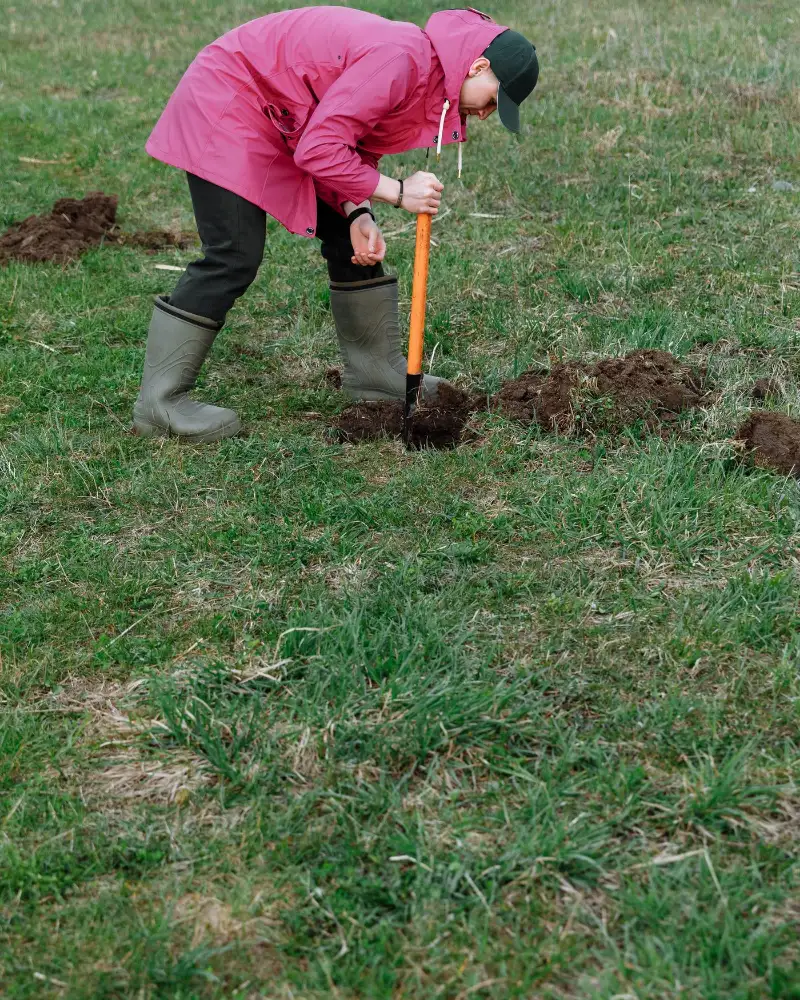
Take your sample
You take the sample yourself, following the step-by-step instructions: eight small cores, mixed into one tube. The whole process takes about 10 minutes.
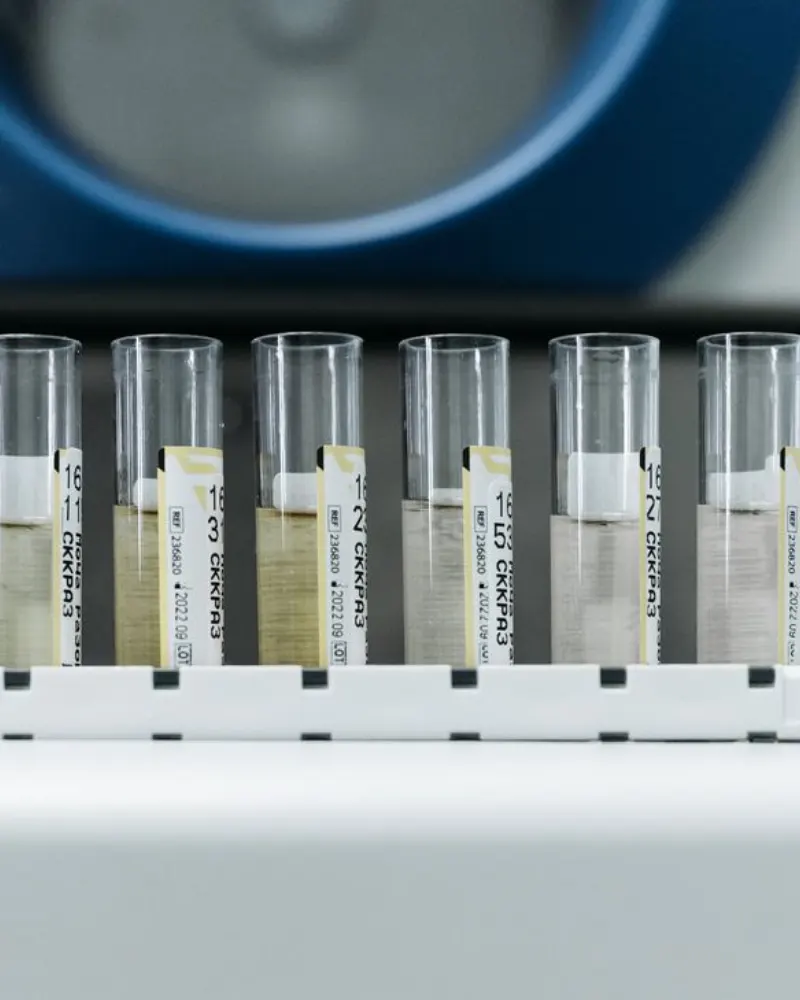
Send it to the lab
You post your sample yourself; that postage is included in the price too. Fertilab analyses your sample; the full report follows within 14 working days of the lab receiving it.
Receive your plan
A complete report plus your written 2-year fertiliser plan, with the Fertilize-it products you need. Ready to apply.


A measurable report, in plain language.
Twenty measurements, a readable chart per nutrient, and a written 2-year fertiliser plan. All in one place.
Example: the values come from a real report by the Fertilab laboratory (lawn on sandy soil). Your report shows your own values.

What the lab looks at
- Nutrients
- Trace elements
- Other elements
- Soil properties
All 20 measurements
Nutrients
What your lawn takes up and uses: nitrogen, phosphorus, potassium, magnesium, sulphur and calcium.
2 of 7 on target · 3 below · 2 above
Nitrate nitrogenNO₃
Nitrogen your grass can take up straight away.
Target 40–100 mg/l
4.8mg/l
Low
Ammonium nitrogenNH₄
Nitrogen that turns into nitrate in the soil.
Target < 1.5 mg/l
< 1.0mg/l
On target
PhosphorusP
Important for root growth and energy in the plant.
Target 3–6 mg/l
11.1mg/l
High
PotassiumK
Helps the grass cope with stress from drought, heat and cold.
Target 75–100 mg/l
20.1mg/l
Low
MagnesiumMg
Part of chlorophyll: without magnesium, no green colour.
Target 50–75 mg/l
53.4mg/l
On target
SulphurS
Needed to build proteins, together with nitrogen.
Target 10–15 mg/l
1.5mg/l
Low
CalciumCa
Builds cell walls and keeps the soil structure stable.
Target 250–600 mg/l
679mg/l
High
Trace elements
Needed in small amounts, with a big effect: boron, copper, iron, manganese, molybdenum and zinc.
2 of 6 on target · 3 below · 1 above
BoronB
Needed in tiny amounts for cell growth.
Target 0.3–0.5 mg/l
0.1mg/l
Low
CopperCu
Part of enzymes in the plant.
Target 2–8 mg/l
3.1mg/l
On target
IronFe
Gives a deep green colour; a shortage causes yellowing.
Target 30–150 mg/l
119mg/l
On target
ManganeseMn
Helps with photosynthesis.
Target 1–3 mg/l
0.1mg/l
Low
MolybdenumMo
Helps the plant use nitrogen.
Target 0.1–0.3 mg/l
< 0.1mg/l
Low
ZincZn
Needed for growth substances and enzymes.
Target 1–10 mg/l
13.0mg/l
High
Other elements
Sodium and chloride (salts) and silicon.
3 of 3 on target · 0 below · 0 above
SodiumNa
Too much sodium harms the soil structure and the grass.
Target < 50 mg/l
11.1mg/l
On target
ChlorideCl
A salt: too much stresses the grass.
Target < 40 mg/l
29.2mg/l
On target
SiliconSi
Found in the cell walls of grass.
Target 6–23 mg/l
8.9mg/l
On target
Soil properties
How the soil behaves: salt content, acidity, organic matter and its ability to hold on to nutrients.
2 of 4 on target · 2 below · 0 above
ConductivityEC
Tells how much salt is in the soil.
Target 0.6–1.2 mS/cm
0.3mS/cm
Low
Acidity (pH-KCl)pH
Decides how well the grass can take up nutrients.
Target 5.2–7
6.3
On target
Organic matterOM
Feeds soil life and holds water and nutrients.
Target 2–5 %
3.1%
On target
Clay-humus complex (CEC)CEC
How many nutrients the soil can hold on to.
Target 100–150 mmol⁺/kg
80mmol⁺/kg
Low
Sample report: these are example values, not your soil’s.
How to read the scale: the green band is the lab’s target range and the ring is the measured value. When the ring falls outside the band, a thin line shows by how much.
Soil structure
How much of the places where the soil holds on to nutrients is taken up by each element.
93%base saturation
Pick an element to see what it does in the soil.
83.0%of the places
Calcium (Ca²⁺)
Builds cell walls and keeps the soil structure stable.
Sample report: this split is an example, not your soil’s.

Not just numbers, but a plan.
Measurements & charts
Visual comparison against the target value
Tailored recommendations
A written 2-year fertiliser plan
Product advice
Fertilize-it products you can order directly
 AI image
One analysis, one price
Order your soil analysis
Lab analysis by Fertilab plus a written 2-year fertiliser plan. You order and pay online, like your fertilizers. You take and post the sample yourself: shipping the kit and your sample is included in the price.
- Available in Belgium and the Netherlands
- Sampling kit in the mail within 5 working days
- Taking the sample takes about 10 minutes
€129.00incl. VAT and shipping
Everything you want to know.
No, absolutely not. The report is yours, you decide what to do with it: follow our fertiliser plan, use the report on its own, or compare the advice with other brands. All fine.